Sunday, 28 September 2014

Roles of a flagship species

In this week’s post, I will be exploring the roles that flagship species can play in conservation. These are well-known, charismatic species that appeals to the public to promotes conservation efforts and for funds (Heywood, 1995). Examples would include elephants, gorillas and the giant panda. Frequently, these species are also umbrella species as conservation of these animals would also help in the conservation of lesser-known surrounding species. The reason I chose this topic is because eco-tourism is currently one of the fastest growing areas of the tourism industry. And what better way to encourage tourists than by attracting them with chances to meet these flag-ship species. Photography, being a major part of eco-tourism would inadvertently be more focused on these flagship species.

The main role of a flagship species is to be able to reach out to the public by acting as an ambassador. Most of the attention has been focused on large, “cute”, terrestrial megafauna. One prominent example would be the WWF’s logo which has a giant panda. By doing so, it appeals to the public to support the conservation efforts and for funding. For instance, the River Safari just had its Panda Party for Kai Kai and Jia Jia’s first anniversary in Singapore. While the use of such flagship species would undoubtedly increase donations, it does not benefit all species equally resulting in lower levels of concern in other ecosystems. For example, McClenachan et al. (2012) found that many of the charismatic marine fishes and invertebrates analysed were threatened by overexploitation. However, little conservation research has been done on them.

Meanwhile, large amounts of money, research and time goes into protecting the popular flagship species such as pandas. The giant panda has become a symbol for China and was even used as the mascot for the Beijing Olympics. Pandas are also occasionally used as diplomatic gifts between China and other countries, a practice termed “panda diplomacy”. For zoos, pandas are rented from China for a price. The Edinburgh zoo pays about US$1 million to rent a pair of pandas from the Chinese government (Vidal, 2014). Additional money would have to be spent to support the pandas for its upkeep and enclosure. While the large large sum does contribute to conservation efforts back in China, I would argue that it can be better spent on perhaps lesser known but threatened species. Furthermore, the new countries hosting the pandas might not be optimal for their health if the keepers lack experience. The use of panda as gifts also runs the risk of commoditising them. Outside of zoos, preliminary findings by Caro et al. (2004) found that the use of flagship species to demarcate the boundaries of protected areas did not help to increase biodiversity in those areas. Hence, the use of a flagship species might not help in conserving other wildlife.

On the outreach aspect, while flagship species do have a role, I feel that organisations should try to educate the public of the dangers to the whole ecosystem instead of focusing on only one or two species. This would help the public to gain a deeper understanding of how the whole ecosystem functions. After all, the ecosystem would not work if there are only flagship species left.

Any thoughts on the issue? I’d love to hear it. J

References:
Caro, T., Engilis, A., Fitzherbert, E., & Gardner, T. (2004). Preliminary assessment of the flagship species concept at a small scale. Animal Conservation, 7(1), 63-70. doi: 10.1017/S136794300300115X
Heywood, V. H. (1995). Global biodiversity assessment: Cambridge University Press.
McClenachan, L., Cooper, A. B., Carpenter, K. E., & Dulvy, N. K. (2012). Extinction risk and bottlenecks in the conservation of charismatic marine species. Conservation Letters, 5(1), 73-80.

Vidal, J. (2014). Zoos weigh up the costs of China's 'pandanomics'. The Guardian. Retrieved from http://www.theguardian.com/world/2014/sep/13/edinburgh-zoo-pandas-tian-tian-china-pandanomics-birth-cub

Sunday, 21 September 2014

Serious Beesiness

I was browsing around Youtube when I came across an interesting video by Sam Droege. It describes how to preserve invertebrate in, of all things, hand sanitizer. While not exactly a scientific method, it allows the specimens to be handled more roughly, a good characteristic when showing it to the public. The past two times I preserved specimens at home was with alcohol and thus, I’m really looking forward to trying this. Now all I need is to find a nice dead bug.


I went on to explore his channel and realised that he is the head of the bee inventory and monitoring program at the U.S. Geological Survey. After preserving the bees, he takes photographs of them and started a photo catalogue of the different bee specimens. By taking hi-resolution shots of bees and its specific body parts, it allows researches from far away to identify the species they have. I think having a photo catalogue together with a traditional identification key will be really useful in helping both scientists and the public to identify bee species. Bees play a very important role in the ecosystem by acting as pollinators. Many agricultural crops depend on bees for pollination. According a study, Gallai et al. (2008) estimated that insects, of which bees are the main pollinators, contributed to about €153 billion of food production. With the Colony Collapse Disorder in the United States and in Europe, this easily available source of information might be useful in solving it. Here are a few images taken by him:


Photos courtesy of USGS Bee Inventory and Monitoring Lab


References:

GALLAI, N., SALLES, J.-M., SETTELE, J. & VAISSIÈRE, B. E. 2009. Economic valuation of the vulnerability of world agriculture confronted with pollinator decline. Ecological economics, 68, 810-821.

Sunday, 14 September 2014

Short trip to Admiralty Park

So, I recently went to Admiralty Park for a little shooting. It’s one of my favourite places for macrophotography due to the wide variety of species present (and there are not too many mosquitoes). Here are some photos from the trip:

Tortoise Beetle stack
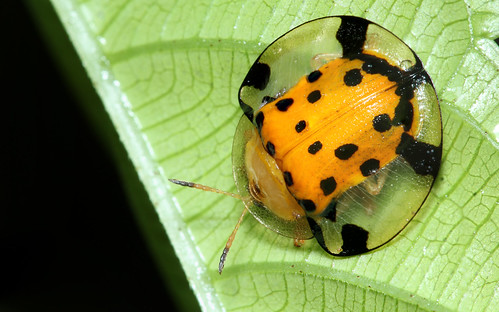
A tortoise beetle. I believe it’s the black spotted yellow tortoise beetle (Aspidomorpha miliaris).


  IMG_0202-1
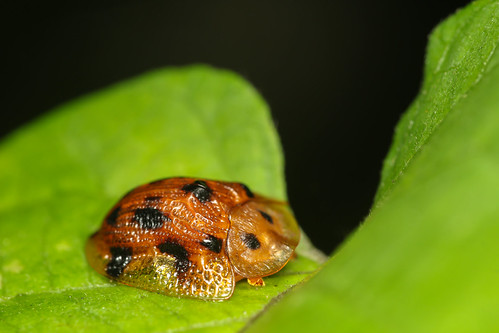
A different tortoise beetle. Might be Laccoptera nepalensis.


IMG_0414-1
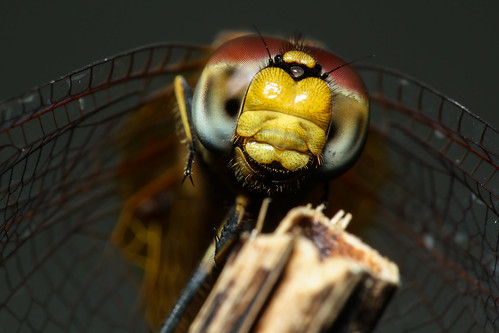
An excited dragonfly. He was really patient with me.


I did not take much photos as it was a short trip most of which was spent finding a green tortoise beetle. I still lack a good shot of those due to its small size and metallic shell which makes it challenging. Besides insects, I managed to spot a white-breasted waterhen leading a few chicks around a tiny pool in the undergrowth but they swam away too quickly for me to get a shot.

Saturday, 6 September 2014

Photography and ... ethics? Part 2

Continuing on from last week, I found a short article on the impact of photography on a population of slender loris (Loris lydekkerianus) in India. The article can be accessed here. The slender loris is currently classified by the IUCN Red List as a Least Concern species. In the article, Kanagavel et al. found that most photos of slender lorises involved them being mishandled. This was done by analysing photos of lorises from India Nature Watch, a popular wildlife photography website in India. They found that 16 out of 28 cases involved the animals being mishandled. Even though the sample size is small (28 incidents), the article is useful in giving us an insight into this trade. Such activities seem to be commonplace as the villagers invited the research team to see a loris they had captured and it occurred over a wide area.

The article states that even though the locals perceive lorises to bring bad luck, they capture lorises for photographers to get paid. Such practices can have wider impacts on the environment. For example, in the article, a villager had to cut down 4 trees to restrict the movement of a loris.


Although the study only looked at the slender loris, I would foresee this type of unethical behaviour occurring more frequently in the future. With India’s rapidly rising middle-class population, more people would pick up the hobby, placing additional stress on India’s wildlife, not limited to the slender loris. However, it also brings up how citizens can help science through their observations.  For example, the photos suggest that the population of the two subspecies of slender loris overlapped contrary to previous information. I believe that photography can have a positive impact on conservation through the use of citizen science. However, steps have to be taken to dissuade unethical behaviours such as the type seen above.


On a separate note, I just received my copy of The Sixth Extinction: An Unnatural History by Elizabeth Kolbert in the mail yesterday. Hopefully its an interesting and informative read.

Friday, 29 August 2014

Photography and ... ethics? Part 1

About a week ago, I read an article in the Straits Times that was quite disturbinge. From the article, a man tied a tern chick’s foot to a bush to allow photographers to get a clean shot of it while the stressed parents were seen flying above the nest.

 Photo by Jaieden Shen

 I find such actions distasteful for a few reasons: 
  1. Handling the chick and stressing the parent might lead to them abandoning the nest and the chick. Compounding the issue is that the Little Tern is threatened in Singapore.
  2. Nature photography should be about capturing the animals in their natural state. While affecting the environment is unavoidable, we should be trying to minimalise the impact of our actions.


I believe as photographers, we can all play a part bringing nature closer to the public audience. We are able to show the public the remaining biodiversity in Singapore and hopefully spark an interest in people. However, we have to be mindful that as ambassadors, the methods we use to capture the image are as important as the image itself.

 So how we (everyone using nature areas) behave? The Nature Society (Singapore) has a really comprehensive code of ethics on the way we should interact with nature. It is well worth a read to see how we can minimalise our impacts. Does a good photograph justify the stress inflicted on the bird? I would say no. 

Saturday, 23 August 2014

Introductions

Hello and welcome to my blog where I will be sharing about environmental issues close to me, in particular, conservation. A little about myself, I’m currently studying at NUS and a hobby of mine is photography, hence the name of my blog. I mainly do macro photography. If you would like to see some of my photos, here's the link to my flickr: https://www.flickr.com/photos/48416502@N04/

For the first post however, I’ll be talking about my experience working in an ecology lab. After completing my National Service, I had worked for a short while at Tropical Marine Science Institute (TMSI). Fresh out of the army and coming from a junior college, it was a whole new experience for me. The job mostly consisted of sorting samples and I had the opportunity to see many interesting specimens in the process. Here is a photo of some fly (order Diptera) pupas we found:


Photo credits to Darren Sim.

Besides working on the project, I also got the chance to interact with a few of the researchers. One piece of advice I received was not to immediately start working after graduation but to go out of Southeast Asia and volunteer/work for a conservation organisation for a few months.


From my short stint at TMSI, I learnt there are many species that rely on water bodies as part of their life cycles. A slight change in the water quality can upset this balance and end up affecting humans as seen in swarming of midges in the past years (there many are other possible reasons for this and it is much more complex than only water quality).